

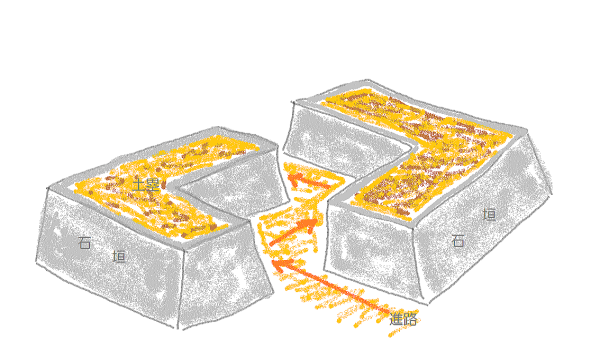
While working at my company, my boss introduced me to a new concept called MASUGATA思想 (Masugata Philosophy). At the time, he explained that he wanted an application structure to follow this way of thinking. I had never heard the term before, and what caught my attention was that the explanation did not begin with software engineering at all — it began with Japanese castles.
The word Masugata(枡型) originally refers to a defensive gate structure used in traditional Japanese castles such as Himeji Castle and Edo Castle. Instead of allowing people to pass directly through the entrance, the structure forced movement through controlled spaces surrounded by walls and multiple gates. The goal was not simply to block enemies, but to slow movement, increase visibility, and create layers of protection.
What made the concept interesting to me was how naturally it connects to software engineering.
Modern systems face similar challenges:
- controlling access,
- preventing dangerous actions,
- isolating sensitive areas,
- and reducing the impact of mistakes.
MASUGATA思想 approaches these problems through structure rather than rules alone. Instead of relying entirely on users or developers to “be careful,” the system itself is designed to guide safer behavior.
The more I thought about it, the more I realized how many software practices reflect this philosophy:
- API gateways,
- approval workflows,
- permission boundaries,
- audit logs,
- staged deployments,
- and confirmation steps before risky operations.
All of these introduce controlled flow into a system.
One of the most valuable ideas behind Masugata thinking is the idea of intentional friction. In software engineering, we often try to make everything faster and more direct. But sometimes, systems become dangerous precisely because actions are too easy. A single mistake can spread instantly across the entire application.
MASUGATA思想 suggests that certain actions should slow users down intentionally. That small amount of friction creates safer systems.
What I found most fascinating is that this philosophy treats architecture as something that shapes behavior. A well-designed system does not only function correctly — it naturally guides people toward safer and more controlled interactions.
Since learning about this concept, I have started seeing system design differently. Instead of only asking whether a feature works, I also think about:
- how users move through the system,
- where boundaries should exist,
- and how the structure itself can prevent problems before they happen.
That is what makes MASUGATA思想 such an interesting bridge between traditional Japanese design and modern software engineering.
(担当:Aisha Satouf)
仕事をしているとき、上司から「MASUGATA思想(枡型思想)」という新しい概念を教えてもらいました。そのとき上司は、アプリケーションの構造をこの考え方に沿って設計したいと言っていました。私はその言葉をそれまで聞いたことがなく、特に興味を引かれたのは、その説明がソフトウェア工学から始まったのではなく、日本の城から始まったことでした。
「枡型(Masugata)」という言葉は、もともと姫路城 や 江戸城 のような日本の伝統的な城で使われていた防御用の門構造を指します。人がまっすぐ入口を通り抜けられるのではなく、壁や複数の門に囲まれた制御された空間を通って移動するように作られていました。その目的は単に敵を防ぐことではなく、移動を遅らせ、視認性を高め、何重もの防御層を作ることにありました。
この考え方が面白いのは、ソフトウェア工学と非常に自然につながっている点です。
現代のシステムも同じような課題に直面しています。
- アクセスを制御すること
- 危険な操作を防ぐこと
- 機密性の高い領域を分離すること
- ミスの影響を最小限に抑えること
MASUGATA思想では、こうした問題に対して、単なるルールではなく「構造」によって対処します。ユーザーや開発者が「気をつける」ことだけに頼るのではなく、システムそのものが安全な行動へ導くように設計されるのです。
考えれば考えるほど、多くのソフトウェア設計がこの思想を反映していることに気づきました。
- APIゲートウェイ
- 承認ワークフロー
- 権限の境界
- 監査ログ
- 段階的デプロイ
- 危険な操作前の確認ステップ
これらはすべて、システム内に「制御された流れ」を導入しています。
MASUGATA思想の中でも特に価値がある考え方の一つが、「意図的な摩擦(intentional friction)」という発想です。ソフトウェア工学では、私たちはしばしば、すべてをより速く、より直接的にしようとします。しかし時として、操作が簡単すぎることこそがシステムを危険にしてしまいます。たった一つのミスが、アプリケーション全体に瞬時に広がる可能性があるからです。
MASUGATA思想は、「一部の操作は、あえてユーザーの動きを遅くすべきだ」と示唆しています。その小さな“摩擦”が、より安全なシステムを生み出すのです。
私がもっとも魅力的だと感じたのは、この思想が「アーキテクチャは人の行動を形作るもの」だと捉えている点です。優れたシステムとは、単に正しく動作するだけではありません。自然と人を安全で制御された行動へ導いていくものなのです。
この概念を知って以来、私はシステム設計を以前とは違う視点で見るようになりました。機能が動くかどうかだけでなく、
- ユーザーがシステム内をどう移動するのか
- どこに境界を設けるべきか
- そして、問題が起きる前に構造そのものがどう防げるのか
についても考えるようになったのです。
それこそが、MASUGATA思想を、日本の伝統的な設計思想と現代ソフトウェア工学を結びつける非常に興味深い架け橋にしている理由なのだと思います。